
Most small business lenders look at credit, but there is no single score that works for every loan. A strong score can help you qualify for lower interest rates and longer business loan terms, while a weaker score may still leave room for working capital, invoice factoring, equipment financing, or other flexible funding options. The real answer depends on the loan type, business revenue, cash flow, years in business, collateral, and how fast you need the money.
In this article, we explore what credit score do you need for a small business loan, how different lenders review credit, and which funding options may fit your business if your score is strong, fair, or less than perfect.
What Credit Score Do You Need for a Small Business Loan?
The credit score you need for a small business loan usually falls somewhere between 500 and 700+, depending on the lender and product. That is a wide range, and for good reason. A secured bank loan, an SBA 7(a) loan, a working capital loan, and invoice factoring do not carry the same risk for lenders. They also do not ask the borrower for the same proof.
A borrower with a 720 personal credit score, two years in business, strong annual revenue, and clean bank statements will usually have more choices. That business may qualify for lower small business loan rates, a bank loan, SBA loans, or longer-term financing. A borrower with a 580 score may still qualify, but the path may look different. The lender may focus more on current deposits, unpaid invoices, equipment value, or short-term revenue.
| Loan or lender type | Common credit score range | Best-fit borrower |
| Traditional bank loan | 680–700+ | Established business with strong revenue, clean credit, and time to wait |
| SBA loan or SBA 7(a) loan | Mid-to-high 600s often preferred | Owner who wants longer terms and can handle a deeper review |
| Online business loan | 500–650+ | Businesses that need faster access and can accept higher rates |
| Equipment financing | Around 630+ may work | The company buying equipment that can support the loan |
| Working capital loan | Often, more cash-flow-based | Business with sales activity but uneven cash flow |
| Invoice factoring | Often less score-dependent | Business with unpaid invoices from reliable customers |
The Small Business Administration explains that SBA-backed loans are issued through lenders, with SBA guidelines helping reduce lender risk. That means there is no magic score that guarantees approval. A useful baseline notes that bank and SBA loans often require a personal FICO Score of 640 or higher, while some online lenders may consider scores as low as 500 in certain cases when assessing how small business loans work.
For business owners, that is good news and bad news. Good, because one lower score does not always shut the door. Bad, because a weaker profile can raise the cost of money. Lower credit can mean higher business loan interest rates, shorter repayment, smaller loan amounts, or more documentation.
Why Personal Credit Scores Matter More Than Many Owners Expect
Many small businesses do not have a deep business credit score yet. Some are young. Some use the owner’s personal card for early expenses. Some have revenue but no formal credit file with major business credit bureaus. Because of that, lenders often look at both personal and business credit before they decide.
The Consumer Financial Protection Bureau gives a plain definition that fits the lending world well: “A credit score is a prediction of your credit behavior, such as how likely you are to pay a loan back on time, based on information from your credit reports.”
A lender is not just being nosy. It is trying to price risk. Credit scores help show how an owner has handled debt in the past. Bank statements show what the business can handle right now. Annual revenue shows scale. Years in business show stability. Cash flow shows whether the payment fits without squeezing payroll, rent, inventory, or taxes.
That is why two borrowers with the same score may receive different offers. One has steady deposits, low debt, and clean business records. The other has irregular sales, overdrafts, and stacked advances. The score may match, but the risk does not.
Minimum Credit Score by Type of Business Loan
The right question is not only what credit score do you need for a small business loan? The better question is what type of loan fits your credit profile, cash flow, and timeline.
An SBA business loan is not reviewed the same way as a working capital loan. A line of credit is not the same as term financing. Unsecured business loans may depend more on credit and revenue because no collateral backs the deal. Secured loans may allow more room because the lender has an asset tied to repayment.
SBA Loan Credit Score Requirements
An SBA loan is a loan made by a lender and partly backed by the Small Business Administration. The SBA does not usually lend money directly for standard 7(a) loans. Instead, approved lenders issue the loan, follow SBA loan requirements, and use SBA guidance to reduce risk.
The SBA 7(a) loan is the best-known SBA loan program. It can support working capital, equipment, business acquisition, refinancing, and commercial real estate in many cases. The SBA also has an SBA Express loan option, SBA 504 loans, microloans, and other SBA loan programs.
For SBA 7(a) Small loans, the SBA’s lender page states that the current minimum SBSS score is 165 in its 7(a) loan program guidance. The SBSS score is not the same as a personal FICO score. It can consider consumer credit bureau data, business bureau data, borrower financials, and application data.
In day-to-day lender practice, many SBA lenders still prefer a strong personal credit score, often in the mid-to-high 600s or better. SBA loan rates can be attractive compared with some short-term business funding, but the trade-off is paperwork, review time, and stricter documentation.
Bank Loan Credit Score and Business Loan Requirements
A bank loan often has the highest credit bar. Banks usually want a clean credit profile, stable annual revenue, at least two years in business, organized tax records, and enough cash flow to support the debt. A score in the high 600s may get a look, but a score above 700 can put a borrower in a better position.
This is where many owners hit the wall. The business may be healthy, but the file may not fit bank requirements. Maybe revenue is seasonal. Maybe the owner had a rough credit year. Maybe the business needs cash this week, not after a long committee review.
A bank loan can be a good fit when the owner wants lower interest rates and can wait. It is less useful when the need is urgent, the business has limited documents, or the credit profile has a few bruises.
Working Capital Loan and Cash-Flow Based Funding
A working capital loan is often used for short-term business needs such as payroll, rent, vendor payments, inventory, repairs, tax obligations, marketing, or a slow receivables cycle. It is not usually built for a major real estate purchase or a long-term expansion project. It is there to keep the business moving.
Dash Capital’s working capital approach fits owners who want a faster, simpler review. Its working capital loan options for small businesses explain that lenders often review cash flow and financial health rather than putting all the weight on the owner’s personal credit score.
That distinction is important. A restaurant with steady card sales, a contractor with active jobs, or a retail store with strong deposits may still have options even if the owner’s score is not perfect. The lender still cares about risk, of course. But cash flow can speak loudly.
Term Loan Credit Score and Repayment Terms
A term loan gives the business a lump sum and a set repayment period. The borrower repays principal and interest over time. It can work for equipment, expansion, marketing, hiring, renovations, inventory, or a planned investment.
Credit requirements for a term business loan depend on the lender. Banks may want stronger credit and longer operating history. Alternative lenders may move faster, but may price the loan higher. Dash Capital’s small business term loan options describe term loans as a way to access a lump sum and repay it over a defined period.
A term loan makes the most sense when the business owner knows the purpose of the funds and can handle predictable payments. If the business has a clear use for the money, the application is often stronger.
Business Line of Credit, Equipment Financing, and Invoice Factoring
A business line of credit works differently from an installment-style term loan. It gives access to a credit limit, and the owner can draw funds when needed. That can be useful for seasonal cash flow, inventory orders, repairs, or short gaps between expenses and revenue.
Equipment financing may be easier to support when the equipment has value. A lender can look at the asset as part of the deal. That does not remove credit from the review, but it may reduce risk compared with unsecured business finance.
Invoice factoring is another path. Instead of relying mainly on personal credit, factoring can focus on unpaid invoices and the credit quality of the customers who owe the money. For B2B companies with slow-paying clients, that can be a practical option.
Credit Score Ranges and What They Usually Mean for Approval
Credit score ranges are not approval rules. They are signals. A lender may approve a borrower below a usual range or decline a borrower above it because the rest of the file does not work. Still, a range can help owners set expectations before they apply for a business loan.
| Credit score range | What it usually means | Likely loan options |
| 720+ | Strong profile with better rate potential | SBA loans, bank loans, business line of credit |
| 680–719 | Good borrower profile, though lender standards still apply | SBA 7(a), term loan, equipment financing |
| 620–679 | Possible approval, but terms may vary | SBA microloan, online term loan, equipment finance |
| 580–619 | More limited path and higher pricing risk | Working capital loan, short-term funding, factoring |
| 500–579 | High-risk profile with fewer choices | Select bad credit small business loans, revenue-based options |
| Below 500 | Very limited approval path | Credit repair, secured options, or non-loan funding first |
A higher score can help with lower business loan rates, larger loan amounts, and longer business loan terms. A lower score may still work, but the lender may ask for more proof that the business can repay. That proof can include recent business bank statements, daily deposits, invoices, contracts, collateral, or a stronger co-owner profile.
Here is where owners should slow down. Approval is not the only goal. A loan that drains cash flow can hurt the business even if it gets approved. The right loan should solve the cash problem without creating a worse one three months later.
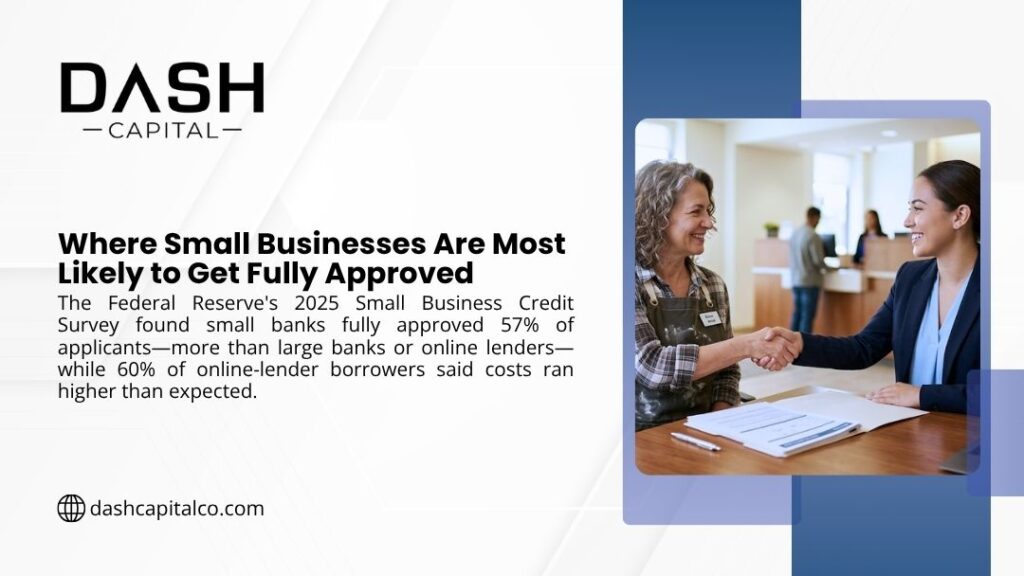
Does Business Credit Score Matter for a Small Business Loan?
A business credit score can matter, especially for established companies. It may show how the business pays vendors, handles trade accounts, and manages commercial obligations. But for many smaller firms, personal credit still carries a lot of weight.
Business credit scores do not follow the same scale as personal FICO scores. Models like Experian’s business credit system, Dun & Bradstreet PAYDEX, and FICO SBSS each assess risk differently. A business might have a strong owner credit profile but limited business credit history, while another may show solid trade accounts and vendor activity but a weaker owner score.
Business credit scoring frameworks generally outline lower-risk ranges based on payment behavior and credit usage patterns. For borrowers, the key takeaway is straightforward: a cleaner business credit profile can help, but it rarely replaces the need for consistent revenue, healthy bank activity, and a clear, practical loan purpose.
Owners who plan to seek larger funding later should treat business credit as a long-term asset. Open vendor accounts that report. Pay early when possible. Keep tax records clean. Separate personal and business spending. Small habits can make a future loan file look far more professional.
How Credit Score Affects Business Loan Interest Rates
A credit score affects interest rates because it affects risk. A borrower with excellent credit, strong cash flow, and years in business may qualify for lower small business loan interest rates. A borrower with weak credit or irregular deposits may still qualify, but the cost of capital may rise.
Current business loan rates vary widely by lender and product. Bank loans and SBA loans often price lower than short-term online funding, but they can take longer and require more documentation. NerdWallet’s June 2026 rate guide reports average bank small-business loan rates from 6.8% to 11%, while SBA loan rates vary by structure. Rates can change, so an owner should always compare current business loan rates before signing.
The cheapest loan is not always the best loan if it arrives too late. A lower-rate SBA loan may be ideal for a planned acquisition or major expansion. A working capital loan may be more useful when a business needs to cover payroll, buy inventory for a rush order, or manage a short cash gap.
The real test is the payment. Before signing, an owner should ask whether the payment schedule fits the business’s weekly and monthly cash flow. If the answer is no, the rate does not matter much. A bad fit is still a bad fit.
Other Business Loan Requirements Besides Credit Score
Credit is only one part of a business loan application. Lenders also review how long the company has been open, how much money it makes, how stable the deposits look, and how the funds will be used.
A business with $80,000 in monthly revenue and a 620 credit score may look stronger than a business with a 700 score and weak sales. A company with two years of bank statements, no overdrafts, and clear vendor payments may have a better case than a newer company with messy records.
Dash Capital’s homepage says typical working capital documentation may include recent business bank statements, a signed application, and a voided check or bank letter. It also says there is no hard credit pull unless the applicant seeks SBA financing. That fits the company’s “simple, fast, flexible” brand promise and its Dash Capital funding process.
| Requirement | Why lenders care | How to prepare |
| Personal credit score | Shows past debt behavior | Check reports before you apply and fix errors |
| Business credit score | Shows commercial payment habits | Build vendor history and pay accounts on time |
| Annual revenue | Shows the business can support debt | Keep clean monthly sales records |
| Years in business | Shows stability | Be ready to explain growth, seasonality, or gaps |
| Bank statements | Shows real cash flow | Avoid overdrafts and keep deposits traceable |
| Loan purpose | Shows whether the request makes sense | Match the loan type to a clear business need |
| Existing debt | Shows repayment pressure | Know your current balances and daily payments |
| Collateral | Reduces lender risk | List equipment, property, or assets if relevant |
This is why a funding advisor can be useful. Many business owners do not know whether they should apply for an SBA loan, a working capital business loan, a line of credit, or unsecured business funding. A rushed application to the wrong lender can waste time and trigger unnecessary credit checks.
How Dash Capital Reviews a Business Beyond Credit Score
Dash Capital’s value is not built around one number on a credit report. For working capital, the review looks more closely at whether the business is active, earning revenue, and able to handle repayment. That means recent business bank statements, deposit patterns, monthly revenue, time in business, current obligations, industry type, and the purpose of the funds can all matter.
This is where Dash Capital’s broker model becomes useful for business owners. Instead of forcing every company into the same bank-style box, Dash can help review the business profile and connect the owner with lender options that may fit the situation. A seasonal business, for example, may need a different structure than a medical office, contractor, restaurant, retail store, or trucking company. The point is not to chase the biggest loan amount. The point is to find capital that supports the business without creating pressure that the cash flow cannot carry.
For owners with less-than-perfect credit, this can help. A lower personal credit score may still matter, but it does not always speak louder than steady deposits, clear revenue, and a sensible funding purpose. That is the gap Dash Capital is trying to solve: fast, practical business funding with real support, less paperwork, and options matched to how the business actually runs.
Can You Get a Small Business Loan With Bad Credit?
Yes, it may be possible to get a small business loan with bad credit, but the options are usually narrower. The lender may offer a smaller amount, a shorter term, a higher business loan interest rate, or a repayment structure tied closely to business revenue.
Bad credit small business loans can help in the right situation. They can also hurt if the owner borrows without knowing the true cost. The warning signs are easy to spot: guaranteed approval, pressure to sign immediately, vague terms, upfront fees before any real offer, or a lender that will not explain the repayment schedule.
A lower credit score does not mean an owner should accept the first offer on the table. It means the owner should compare carefully. A working capital loan may fit a business with steady deposits. Invoice factoring may fit a company with strong receivables. Equipment financing may work when the equipment has resale value. A microloan may help a newer business that needs a smaller amount.
And sometimes, the best move is to wait. If the need is not urgent, a few months of stronger deposits, lower credit utilization, and cleaner payment history can improve the application. That can lead to better terms, and better terms can save real money.
How to Improve Your Chances Before You Apply for a Business Loan
Before you apply for a business loan, check your personal credit reports and look for errors. Review your business credit if you have one. Bring past-due accounts current where possible. Lower revolving balances if cash allows. Keep business funds in a business account, not mixed with personal spending.
Next, review your bank statements the way a lender would. Are there overdrafts? Are deposits steady? Are there payments to other lenders every day? Are sales seasonal? If the business had a weak month, be ready to explain why and show whether the trend has changed.
The application should match the purpose. A term loan may fit a planned project. A business line of credit may fit flexible cash needs. A working capital loan may fit short-term operating costs. Equipment financing may fit a machine, vehicle, or tool purchase. If the loan purpose is vague, the file looks weaker.
Dash Capital’s process is built for owners who do not want to guess their way through the funding market. The company says owners can apply online, get reviewed quickly, and receive funds in 24–48 hours once approved. If you want to see where your business may fit, you can request a business funding quote.
Credit Score vs. Cash Flow: Which Matters More?
For many small business owners, this is the real question. Credit score looks backward. Cash flow shows what is happening in the business right now. A lender may care about both, but the weight can change depending on the loan type.
| Review factor | What it shows | Why it matters |
| Personal credit score | How the owner handled past debt | Helps lenders judge repayment habits and risk |
| Business credit score | How the company handles commercial accounts | Useful for established businesses with vendor history |
| Cash flow | How money moves through the business now | Shows whether the business can support payments |
| Bank statements | Deposit strength, overdrafts, and account activity | Gives lenders a real view of daily operations |
| Time in business | Stability and survival through business cycles | Older businesses often look less risky |
| Funding purpose | Why is the money needed | A clear purpose makes the request stronger |
| Existing debt | Current repayment pressure | Too much debt can weaken approval odds |
A high credit score can help, but it does not rescue weak cash flow. Strong deposits can help, but they may not erase serious credit problems. The best file shows both: a responsible borrower and a business with enough cash movement to repay. That is why Dash Capital’s review style can be helpful for owners who need a more practical look at their business, not just a hard yes or no based on one score.
Which Loan Type Fits Your Credit Profile?
The best loan is not always the one with the biggest amount. It is the one that fits the business’s credit profile, cash flow, use of funds, and repayment comfort.
| Your situation | Better-fit loan direction | Why it may fit |
| Strong credit and established revenue | SBA loan or bank term loan | Lower rates and longer terms may be possible |
| Good credit and a planned project | Term loan | Predictable payments help with budget control |
| Uneven cash flow but steady deposits | Working capital loan | The review may focus more on business performance |
| Need flexible access to cash | Business line of credit | Draw only what the business needs |
| Need equipment | Equipment financing | The asset may support the loan structure |
| Low credit but strong invoices | Invoice factoring | Customer payment quality may matter more |
| New business | Startup loan, microloan, or alternative funding | Limited history narrows the lender pool |
Dash Capital lists working capital, term loans, and lines of credit on its compare loan products section, making it easier for business owners to explore financing options, including restaurant business loans, based on their industry’s needs. That matters because a business owner with a lower personal credit score may not need to force a bank loan application if a different product fits better.
A restaurant may need inventory before a busy season. A contractor may need cash while waiting for a customer payment. A medical office may need equipment. A retail shop may need a line of credit before a holiday rush. Same word, “loan,” but not the same need.
FAQs About Credit Score for Business Loan Approval
What credit score do you need for a small business loan?
It depends on the loan type. Bank and SBA loans often favor borrowers in the mid-600s to 700s, while some online lenders and working capital options may consider lower scores when the business has steady revenue and healthy cash flow.
Can I get a business loan with a 600 credit score?
A 600 credit score may still qualify for some business loans, especially working capital loans, equipment financing, invoice factoring, or certain online loan programs. The trade-off may be higher rates, smaller loan amounts, or shorter repayment terms. Strong business bank statements can help.
What credit score is needed for an SBA 7(a) loan?
Many SBA lenders prefer personal credit in the mid-to-high 600s, although requirements vary by lender. For SBA 7(a) Small loans, the SBA has also used SBSS scoring, and its 7(a) lender guidance lists a current minimum SBSS score of 165.
Do lenders check personal or business credit?
Many lenders check both personal and business credit. Personal credit is especially important for newer companies or businesses without a long commercial credit file. A business credit score may help when the company has trade accounts, vendor history, and established financial records.
Is a small business loan secured or unsecured?
A small business loan can be secured or unsecured. A secured business loan uses collateral such as equipment, inventory, receivables, or property. Unsecured business loans do not require specific collateral, so lenders may rely more on credit, revenue, cash flow, and business history.
Does a business loan affect personal credit?
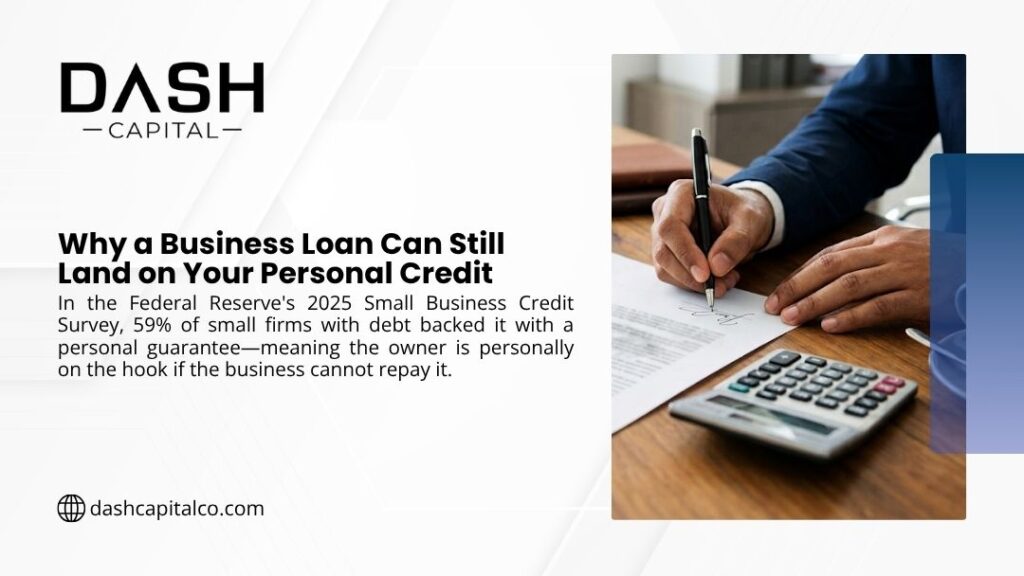
A business loan can affect personal credit if the lender checks personal credit, reports payment activity, or requires a personal guarantee. Missed payments or default can create personal risk. Owners should read the terms before they sign.
Can startups get business loans with low credit?
Startups can get business loans, but low credit makes it harder. A new business may need strong personal credit, collateral, revenue, industry experience, a smaller loan amount, or alternative funding. Some owners start with a microloan, secured loan, or working capital option once revenue begins.
The Right Score Helps, But the Right Loan Fit Matters More
So, what credit score do you need for a small business loan? The honest answer is that it depends on the lender, the loan type, and the strength of the business behind the score. A 720 score can open doors, but it does not replace revenue. A 600 score can limit choices, but it does not always end the conversation.
Credit scores matter because they help lenders judge risk. Cash flow matters because it shows whether the business can repay. The best funding decision looks at both.
Dash Capital helps business owners cut through the guesswork by reviewing the business profile and helping connect owners with funding options through its lender network. If your business needs working capital, a term loan, or a line of credit, the next step is not to chase every lender on the internet. The better move is to compare options that fit your business, your timeline, and your cash flow.
If you want a practical answer based on your numbers, speak with Dash Capital and see what funding options may be available for your business today.
