
Profit and cash are not the same thing. A business can look healthy on its profit-and-loss statement and still miss payroll, because the money it earned is sitting in unpaid invoices while the bills come due today. Most small businesses that close do not fail because they are unprofitable; they fail because they run out of cash. This guide gives you a working definition, a simple forecast you can build this week, tactics to pull money in faster and push payments out longer, a sensible reserve target, and a way to cover a gap without panicking. The U.S. Small Business Administration treats sound money management as the backbone of staying open.
What Cash Flow Actually Means (and Why Profit Isn’t Enough)
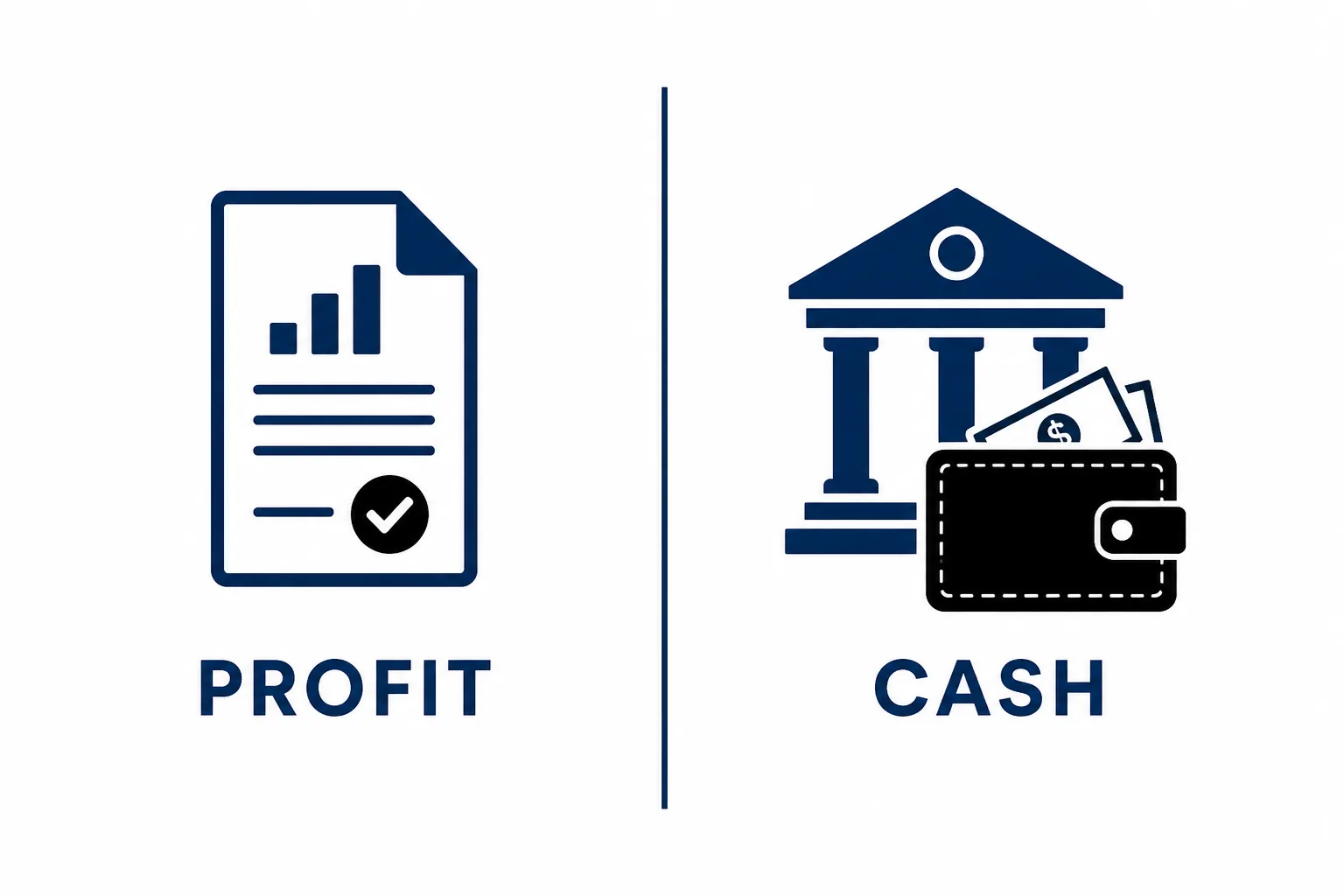
Cash flow is the money moving in and out of your business over a set period. When more comes in than goes out, cash flow is positive. When more goes out than comes in, it is negative, and a run of negative months is what empties the bank account.
Here is the plain difference between cash and profit. You finish a $10,000 project and send the invoice. Your accountant books $10,000 in revenue, so on paper you are profitable. But the client pays in 60 days, and meanwhile you owe your supplier $4,000 this week. The profit is real; the cash is not there yet. Yale School of Management’s guide to cash management principles in a small business makes the same point: timing, not just totals, decides whether you can pay your bills.
The profit is real; the cash is not there yet. Timing, not just totals, decides whether you can pay your bills.
A cash flow statement breaks this movement into three types: operating (day-to-day sales and expenses), investing (buying or selling equipment and assets), and financing (loans, credit, and owner contributions). For most owners, operating cash flow is where the daily fight is won or lost.
Start With a Cash Flow Forecast (Know Your Numbers)
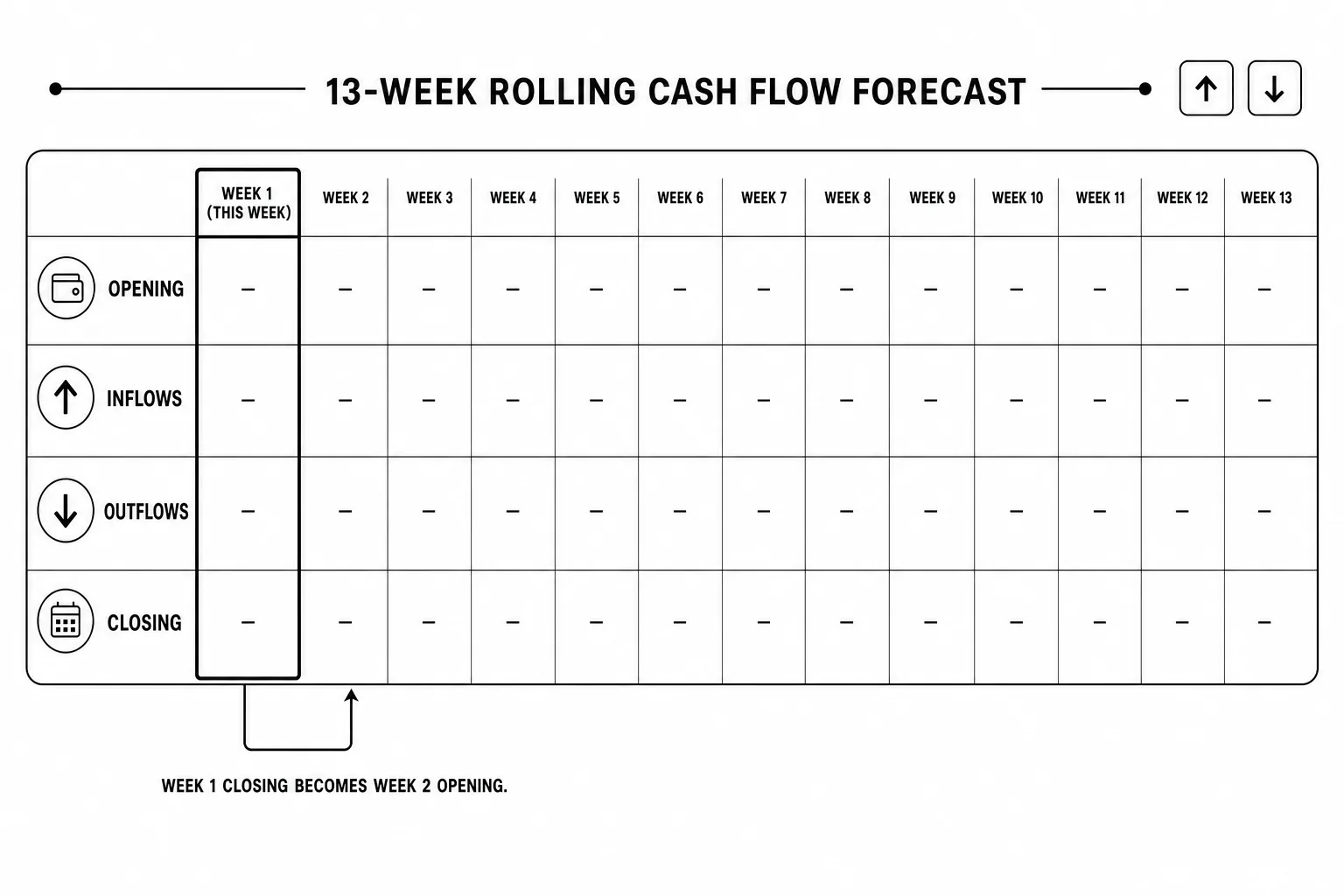
You cannot manage what you cannot see coming. A forecast turns cash flow from a monthly surprise into something you can steer.
Build a Simple 13-Week Rolling Forecast
Thirteen weeks (one quarter) is short enough to stay accurate and long enough to spot trouble early. In a spreadsheet, give each week four rows:
- Opening balance (cash you start the week with)
- Expected inflows (invoices due, sales, deposits)
- Expected outflows (payroll, rent, suppliers, loan payments, taxes)
- Closing balance (opening plus inflows minus outflows, which becomes next week’s opening)
The first week a closing balance turns negative is your early warning. You now have weeks, not days, to collect an invoice, delay a purchase, or line up credit. Update it every week with real numbers; a forecast you set once and forget is just a guess. Australia’s U.S. Small Business Administration guidance on managing cash flow stresses this habit of regular monitoring.
Identify Your Break-Even Point
Your break-even point is the sales level where total income covers total costs. It tells you the minimum cash you must generate each month just to stand still. Once you know that floor, every forecast becomes a test: are we clearing it, and by how much?
Speed Up the Money Coming In
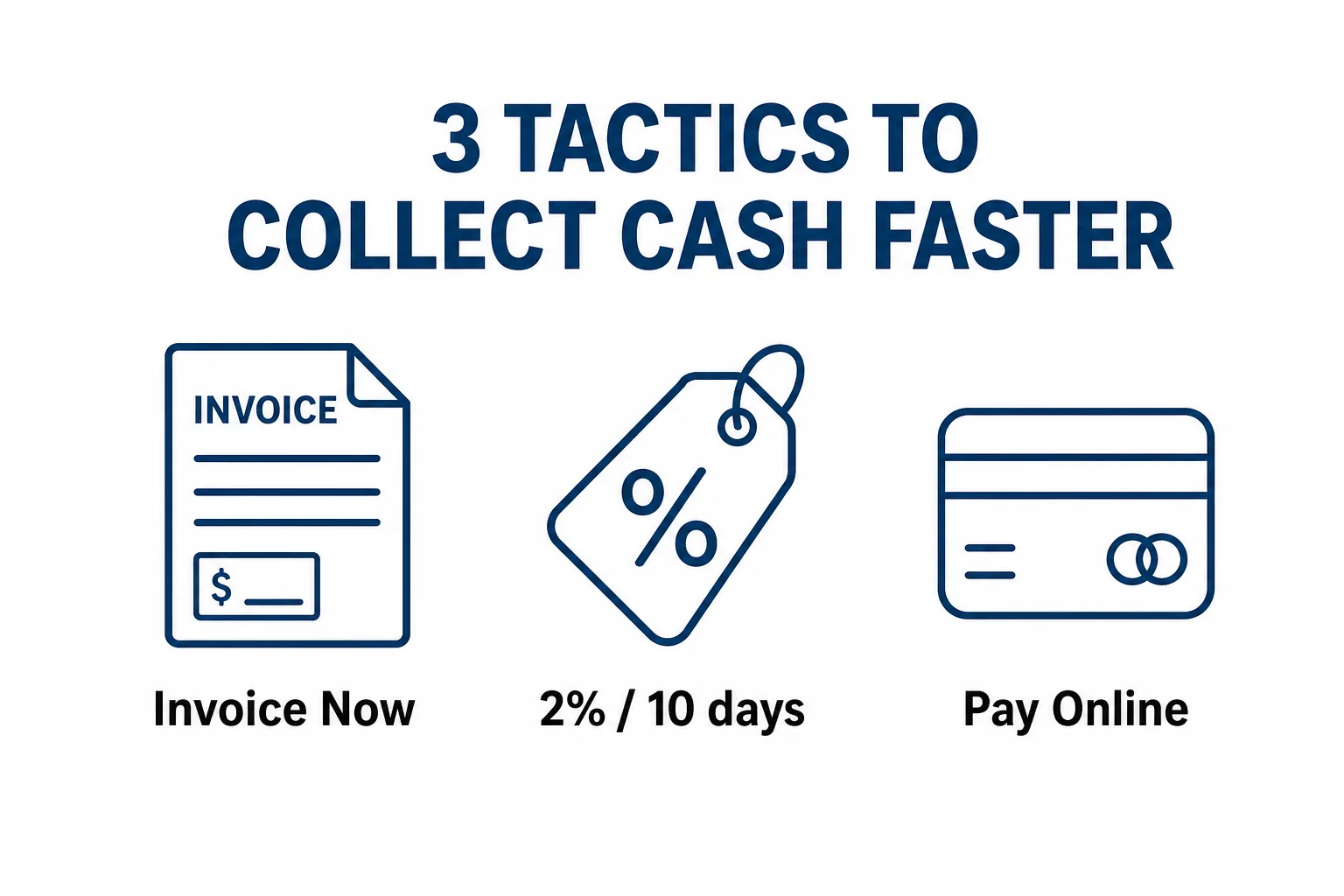
The faster cash arrives, the smaller your gaps. A few habits make a large difference.
Invoice Immediately and Set Clear Terms
Send invoices the day work is delivered, not at month-end. State the due date, accepted payment methods, and any late fee in plain language. Shorter terms (say, net 14 instead of net 30) can pull weeks of cash forward across a year.
Reward Early Payment and Chase Late Payment
A small early-payment discount (for example, 2% off for paying within 10 days) often costs less than the interest on borrowing to cover the gap. Just as important, follow up the moment an invoice goes overdue. A polite reminder on day one of lateness collects far more than a stern letter on day 45.
Take Deposits and Use Electronic Payments
For larger jobs, bill in milestones or take a deposit up front so you are not funding the whole project from your own pocket. Electronic payments and card-on-file options shorten the time between “invoice sent” and “cash received.” When customers are simply slow to pay and you cannot wait, you can turn unpaid invoices into working cash through invoice factoring, which advances most of an invoice’s value now instead of in 60 days.
Managing this flow is crucial to cover expenses, invest in growth, and avoid financial hiccups. (1) I bill on the 23rd of each month. I invoice …
Slow Down and Control the Money Going Out
Managing outflows is the other half of the equation, and it is often easier to control than income.
Align Payables to Receivables
Negotiate longer terms with suppliers where you can, and time what you owe to land after what you are owed comes in. If customers pay you in 30 days, paying suppliers in 30 rather than 15 keeps cash in your account longer without hurting anyone. A Walden University study on sustainable cash flow strategies for small and medium businesses found that deliberately managing this working-capital timing is one of the strategies that helps owners survive lean stretches.
Time Big Purchases and Choose Lease vs. Buy
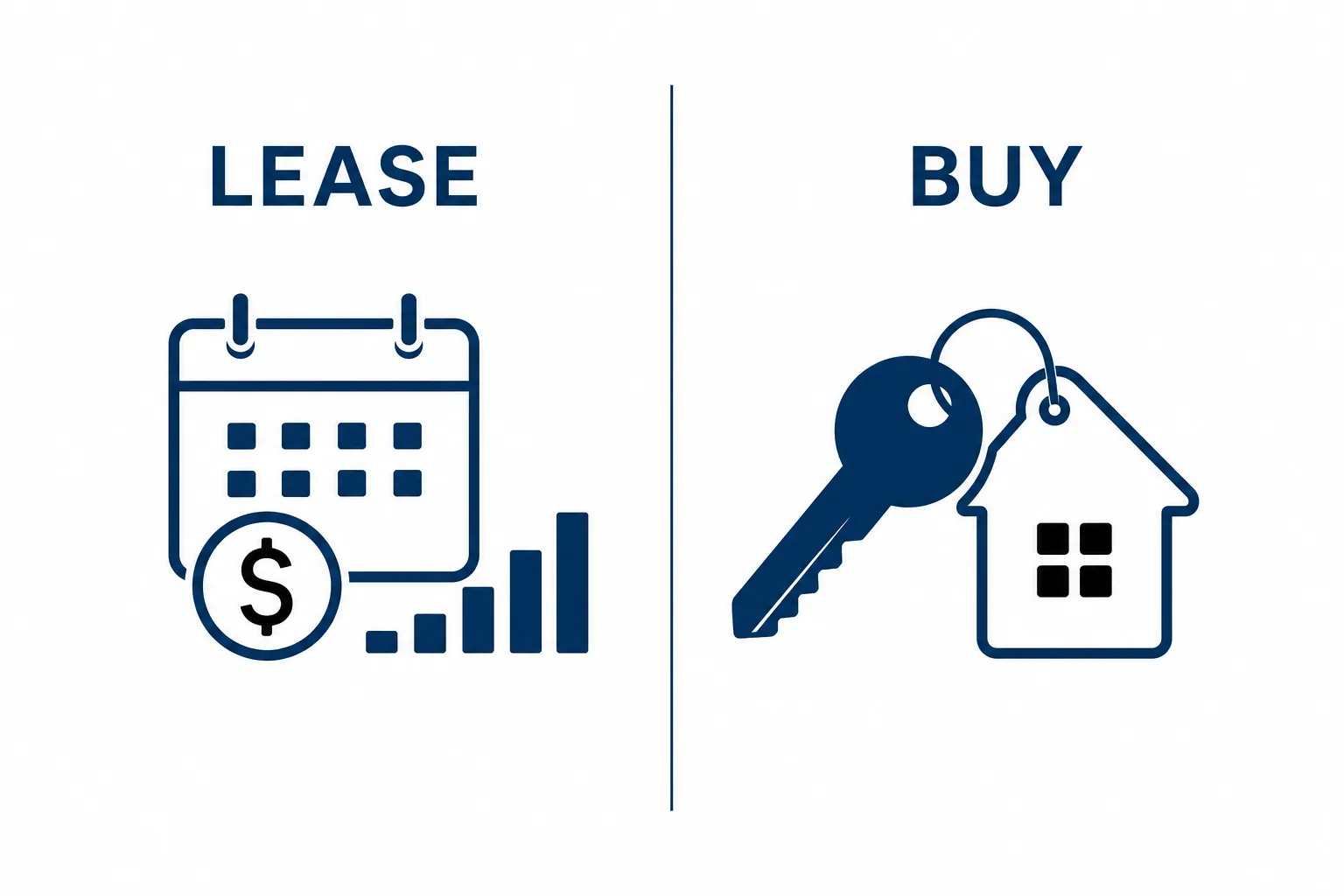
Separate genuine needs from wants, and schedule large purchases for stronger cash months. For expensive equipment, leasing spreads the cost and protects your cash cushion, while buying makes sense when you have the reserves and want to own the asset outright.
Trim Recurring Costs and Build a Buffer
Audit subscriptions, memberships, and services quarterly; the small recurring charges add up. Redirect part of what you save into a cash buffer so a slow month does not become a crisis.
How Much Cash Flow (and Reserve) Should a Small Business Keep?
A widely used benchmark is to hold three to six months of operating expenses in reserve. Treat that as a range, not a rule. A business with steady, predictable revenue can sit near the lower end; one with seasonal swings or a few large customers should aim higher, because a single late payment or slow quarter hits harder. The point is not a magic number but a cushion sized to your own volatility. Build toward it gradually rather than waiting for a windfall.
Bridging Cash Flow Gaps With the Right Financing
Even a well-run business hits gaps: a seasonal dip, a big order that needs materials up front, or a slow-paying client. Using financing to bridge those moments is a normal tool, not a sign of failure.
| Option | Best for | How it works |
|---|---|---|
| Line of credit | Short, unpredictable shortfalls | A revolving credit line lets you draw only what you need and pay interest only on what you use. See our guide on how to get a business line of credit. |
| Working capital loan | Larger, planned needs (a large order, growth push, known slow season) | Provides a lump sum with a fixed repayment schedule you can plan around. |
A Line of Credit for On-Demand Shortfalls
A revolving credit line lets you draw only what you need and pay interest only on what you use, which suits short, unpredictable gaps. If that fits your pattern, our guide on how to get a business line of credit walks through qualifying and applying.
A Working Capital Loan for Larger, Planned Needs
When the need is bigger and you can see it coming (a large order, a growth push, a known slow season), a working capital loan for short-term needs provides a lump sum with a fixed repayment schedule you can plan around.
One quiet lesson from experienced owners: secure credit before you need it. Applying for small business loans while your numbers look strong is far easier than scrambling during a crunch. Setting up a facility with Dash Capital when cash flow is healthy means the safety net is already in place when a gap appears.
Use Tools and a Simple Cash-Flow Routine
Dedicated accounting or cash-flow software (with dashboards and automated payment reminders) removes the guesswork and the manual chasing. But tools only help if you use them on a rhythm. Set a standing weekly cash review: update the 13-week forecast, check which invoices are outstanding, confirm what is due to go out, and note any week where the closing balance looks thin. Fifteen minutes a week keeps you ahead of problems instead of reacting to them.
The Core Rules to Remember
A tight set of principles covers most of what matters:
- Forecast constantly so you see gaps before they arrive.
- Collect faster by invoicing early and following up.
- Pay slower (within agreed terms) to hold cash longer.
- Keep a buffer sized to your revenue swings.
- Never confuse cash with profit when judging your position.
The deeper picture comes from the seven cash flow drivers that move your balance: revenue growth, profit margins, overhead costs, accounts receivable, accounts payable, inventory, and capital expenditure. Improve any one of them (collect receivables faster, trim overhead, lighten inventory) and cash flow improves with it.
Frequently asked questions
How do you maintain cash flow in a small business?
What are the five rules of cash flow?
How much cash flow should a small business have?
What are the 7 cash flow drivers?
What’s the difference between cash flow and profit?
The businesses that survive are the ones that watch cash every week and line up funding before the crunch rather than during it. When a gap does appear, Dash Capital’s financing options are there to help you bridge it and keep operating with confidence.
