
Cash flow, not profit, is what keeps the doors open. A business can look profitable on paper and still run out of money to make payroll, restock, or pay a supplier on time. That gap between earning money and actually holding it is where most small businesses get into trouble. A study on cash flow management and firm performance ties the quality of that management directly to whether a firm survives and performs. Below are the concrete causes of cash flow problems, why they happen, and what to do about each one.
What a “Cash Flow Problem” Actually Means
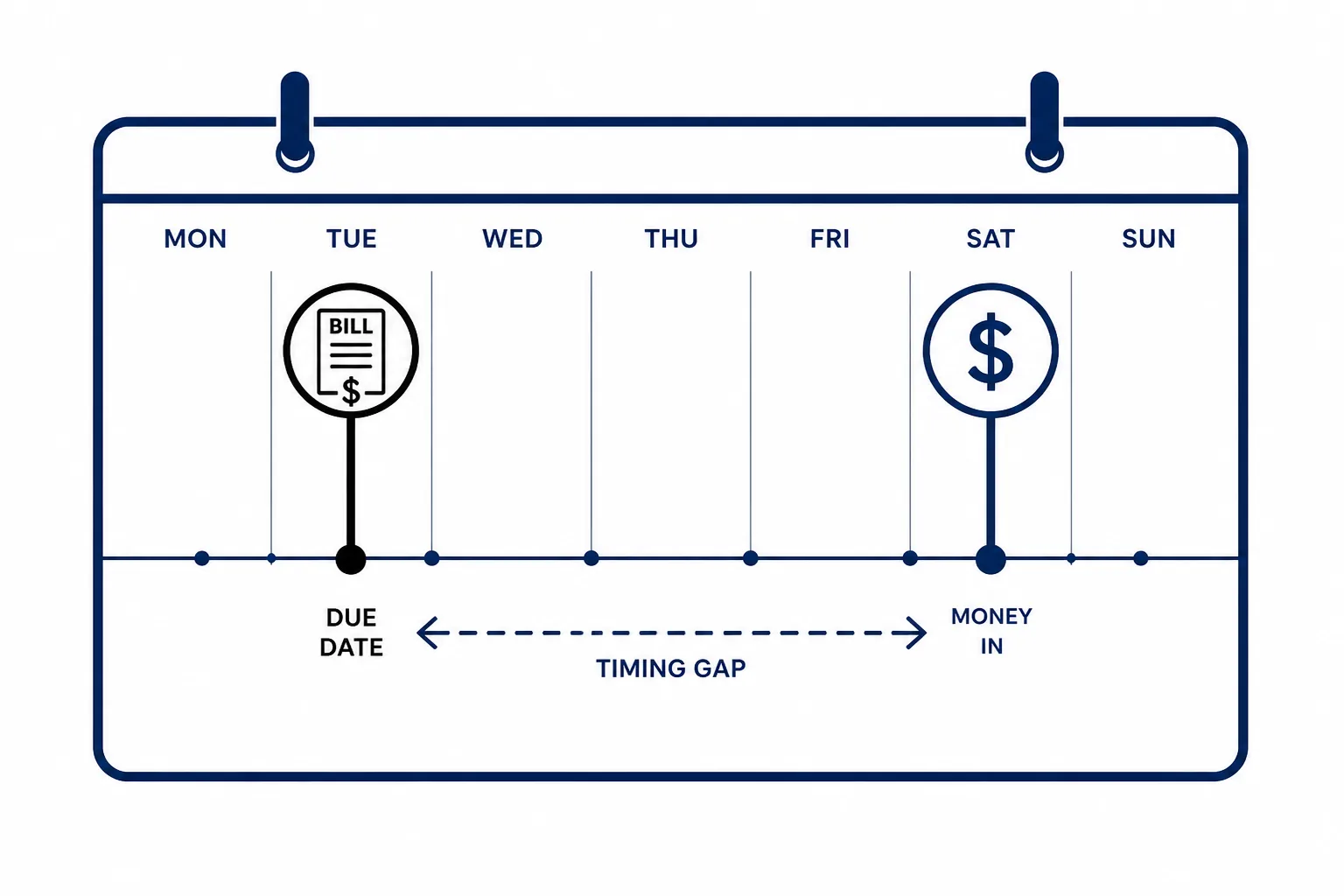
Cash flow is the timing of money moving in versus money moving out. Profit is what you earn after costs over a period; cash flow is whether you have the dollars on hand the day a bill is due. You can be owed $40,000 by customers and still be unable to cover a $6,000 rent payment because that money has not arrived yet.
That timing gap is what makes these problems so easy to miss. The numbers can look fine in your accounting software while the bank balance quietly slides toward zero. Healthy, growing businesses hit this wall all the time, which is exactly why understanding the root causes matters more than watching your revenue line.
You can be owed $40,000 by customers and still be unable to cover a $6,000 rent payment because that money has not arrived yet.
The Most Common Causes of Cash Flow Problems
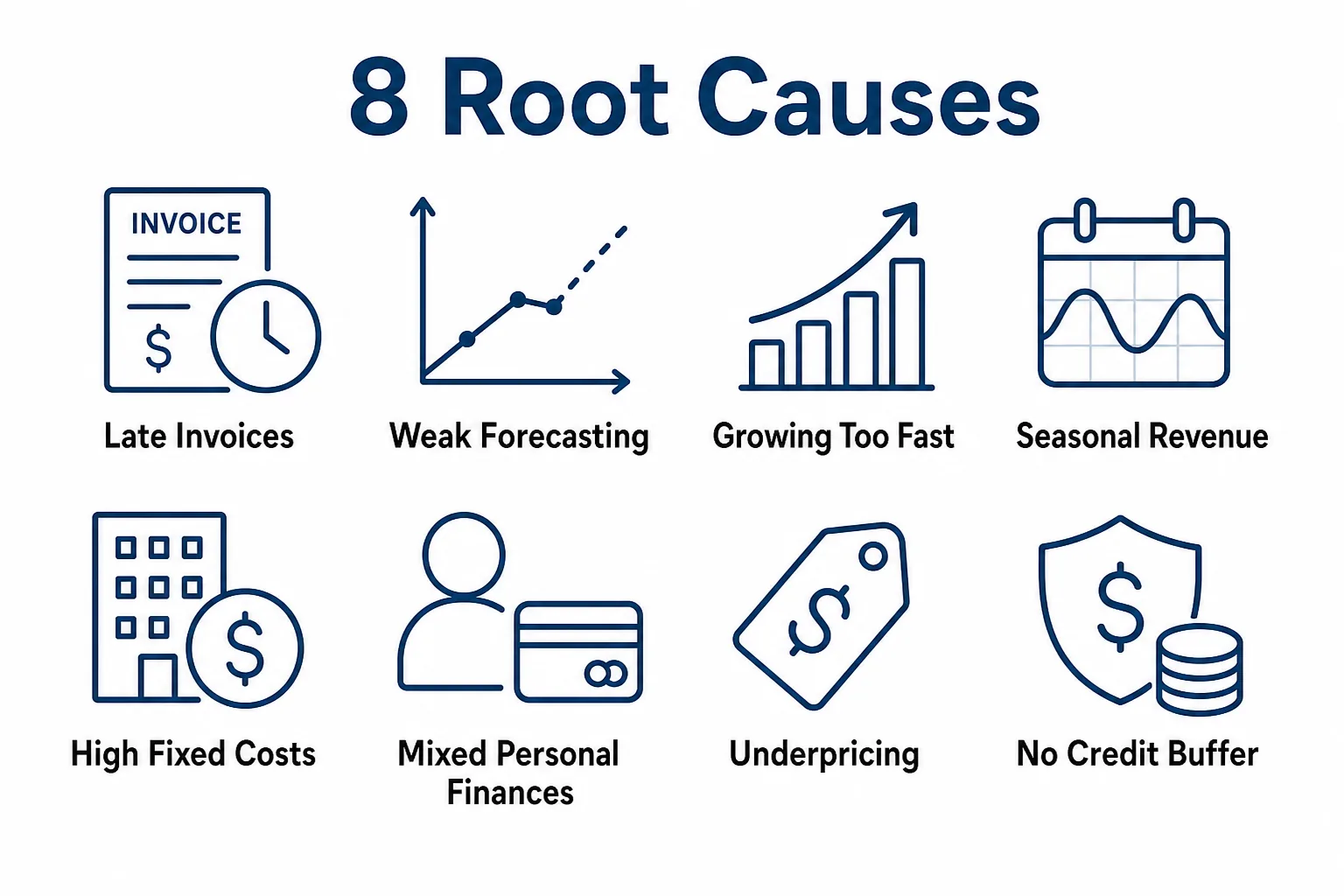
Late or Unpaid Customer Invoices
This is the number one driver. When customers pay 30, 60, or 90 days late, you are effectively financing their operations while starving your own. A single large client who slips a payment can wipe out a month of working capital. Tightening terms and following up promptly helps, and some owners bridge the gap by using invoice factoring to turn unpaid invoices into working capital rather than waiting for slow payers.
Cash flow stress usually comes from not having visibility, rather than doing anything wrong. A lot of owners track cash weekly in a simple …
Weak Budgeting and Cash Flow Forecasting
Many owners run on gut feel with no real visibility into upcoming receivables and payables. Without a forecast, you cannot see a shortfall coming until it lands. Structured planning changes outcomes: research on sustainable cash flow management strategies found that owners who apply deliberate forecasting and management practices are better positioned to keep their businesses solvent.
Growing Too Fast
Growth feels like success, but expansion eats cash. New hires, more inventory, bigger premises, and equipment all get paid for before the extra revenue shows up. Scale faster than your incoming cash can support and you can grow your way straight into insolvency.
Revenue growth making cash flow worse is a specific pattern and it usually means the timing mismatch is scaling with the business, not staying …
Seasonal or Uneven Revenue
Retailers, contractors, and tourism-linked businesses often earn most of their income in a few months, then coast through lean stretches. If the fat months are not managed to carry the thin ones, the off-season becomes a recurring cash crisis.
Overspending and High Fixed Costs
Rent, subscriptions, leases, and salaries that ratchet up during good times become anchors when revenue dips. High fixed costs remove flexibility, so a small drop in sales turns into a serious shortfall you cannot quickly cut your way out of.
Mixing Personal and Business Finances
Running both through one account muddies visibility. You lose track of what the business actually earns and spends, tax time becomes a mess, and it is easy to drain operating cash on personal expenses without realizing it until the account is empty.
Underpricing or Inconsistent Pricing
If your margins are too thin, there is never enough left over to build a buffer. Pricing that swings from job to job, or that has not been reviewed against rising costs in years, quietly erodes the cushion every business needs to absorb a slow month.
No Access to Credit or a Cash Buffer
When a timing gap hits and there is no reserve and no credit line, a solvable problem becomes an emergency. This is where a small business loan or line of credit to bridge timing gaps earns its place. Owners are often turned down not because the business is weak but because the file does not fit bank criteria, so it helps to understand the credit score you need to qualify for a small business loan before you apply.
The Hidden Costs of Ignoring Cash Flow Problems
Cash flow trouble rarely stays contained. Left unaddressed, it quietly compounds:
- Missed growth opportunities. You pass on bulk discounts, new hires, or a big order because the cash is not there.
- Operational disruptions. Payroll gets delayed, inventory runs short, and day-to-day work stalls.
- Strained supplier relationships. Late payments cost you priority, favorable terms, and goodwill with the vendors you depend on.
- Reputational damage. Word travels. Unreliable payment behavior follows you into future negotiations and financing.
How to Fix and Prevent Cash Flow Problems
Every cause above has a countermeasure. Pair them:
- Tighten invoicing. Shorten payment terms, invoice immediately, and follow up on overdue accounts on a schedule.
- Build a 13-week cash flow forecast. A rolling short-term forecast surfaces shortfalls while you still have time to act, a practice the firm-performance research links to stronger outcomes.
- Separate business and personal accounts. Clean books give you honest visibility.
- Secure financing before the crunch. Arrange a line of credit or factoring when you are healthy, not when you are desperate.
- Review pricing regularly. Make sure margins fund a reserve.
- Build a cash cushion. Even a few weeks of operating expenses set aside changes how you weather a slow stretch.
